Showing posts with label Best Actor. Show all posts

Friday, December 6, 2019

OSCAR WATCH: Marriage Story


The most toxic relationships are the ones you don't even realize as such, until hindsight makes you see things clearly. That's the lesson Nicole and Charlie learn in "Marriage Story", the exceptional new drama from Noah Baumbach. Stunningly portrayed by Scarlett Johansson and Adam Driver, this Best Picture Oscar hopeful conveys honest truths about love, marriage and divorce.

We first meet the embattled couple - Nicole, a up-and-coming actress and Charlie, a hotshot theatre director - during a mediation session, as both have decided to split amicably, in the best interest of themselves and their child. When the therapist asks them to list the positive things about their partner, however, Nicole suddenly realizes that she's harboring deeper feelings of pain than she initially suspected. Subsequently, she uproots her New York life - and their son Henry - to return to Los Angeles and be with her mom. But the pressures of long-distance parenting puts a strain on their civil friendship. Though they had agreed to forego legal proceedings, a heated divorce case and custody battle ensues.

The messiness of divorce is put in a sharp focus as Baumbauch's perceptive screenplay unleashes the myriad of emotions associated with it. As Nicole tries to rationalize the reasons for the split, the film gets to the truth of how willfully one-sided relationships can be, as the hopes and dreams of one partner become subsumed into the other's. It is often said that married people gradually begin to look like one another and "Marriage Story" poignantly conveys that "oneness" and loss of self.

Smartly, the script balances both perspectives, also showing how Charlie's ambition and pride caused him to neglect his wife's needs and to a certain extent, his own. Indeed, the nuances of both characters' personalities are brilliantly elaborated through many relatable moments littered throughout. I'm sure many audiences can relate to the hate-filled outbursts you instantly regret, as well as the subconscious competitiveness and selfishness that can erode a relationship over time.

While Johannson and Driver (slam dunk Best Actor and Best Actress nominees) show incredible vulnerability as the leads, the rest of the scintillating cast is equally as riveting. Laura Dern is particularly compelling as Nicole's self-assured lawyer who fights for her client like a bulldog with a smile. After two nominations throughout her career, she may have finally earned her first Oscar for Best Supporting Actress for her work here.

Dern's delicious performance embodies one of the film's most winning touches, namely it's frequent moments of levity. Indeed, Baumbach deserves every Best Director and Best Original Screenplay accolade he'll receive during this awards season for his masterful juggling act of humor and pathos. Punctuating the narrative with music, situational comedy and delightful bit roles (Merritt Wever and Julie Hagerty are terrific as Nicole's sister and mother), it serves as a reminder that things are rarely black or white in life and relationships. As conveyed in the heartrending monologues which bookend the film, when all is said and done, sometimes the hardest truth about broken relationships is that there's still some love that remains.

Saturday, October 19, 2019

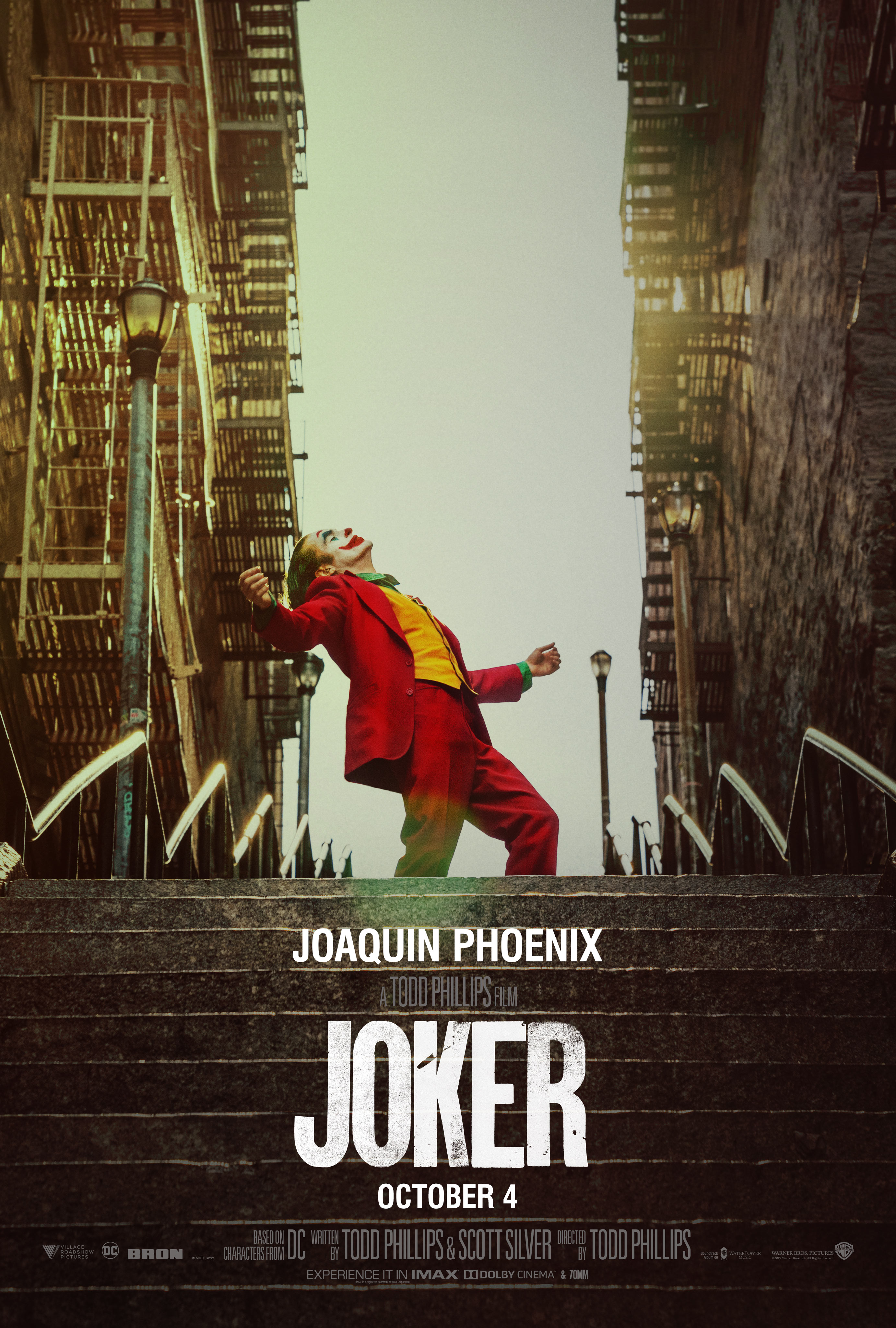
OSCAR WATCH: Joker


Ever since Christopher Nolan completed his final installment of The Dark Knight trilogy, cinematic adaptations of DC comics have failed to capture the zeitgeist in contemporary film culture. While the rival Marvel Cinematic Universe has soared to unprecedented heights, the DCEU has been criticized for their super-serious, dark aesthetic which turned even the squeaky clean Superman into an agent of chaos. Rather than embrace the "comic" nature of their origins, however, DC films have instead doubled down on their dark, gritty house style. Indeed DC has even dedicated entire films to villains, including "Suicide Squad" and now, "Joker". As directed by Todd Phillips, this bleak character study is the first under the proposed DC Black banner and it is arguably the most accomplished - and most problematic - DC film of the post-Nolan era.

Joaquin Phoenix stars as Arthur Fleck, a lonely and mentally ill resident of a decaying Gotham city. His days are filled with caring for his ailing mother, going to therapy sessions and making a living as a party clown. But his big dream is to become a standup comedian. While he aspires to be like the successful talk show host Murray Franklin (Robert De Niro), a disorder that causes him to laugh uncontrollably attracts the ridicule of his intolerant society. Unable to cope with the fading possibilities of fulfilling his dreams and suffering the abuse from various sources, Arthur turns to a life of crime and embraces the alias of Joker.

As Arthur "breaks bad", both actor and director fully commit to the film's unsettling premise. In one of the most striking performances of the year, Joaquin Phoenix is at once grotesque and sympathetic. As he breaks into spontaneous laughter and contorts his emaciated body, he strikes fear into the audience long before he turns to violence. But what makes the performance so compelling - and a surefire Best Actor contender - is its vulnerability. Phoenix conveys a deep pain in his quest for acceptance, thereby humanizing this iconic villain like never before.

Indeed, Phillips and Scott Silver's script works overtime to generate audience sympathy for its protagonist. Arthur receives virtually no kindness from any of the named supporting characters, and the world created is oppressively bleak. You can practically smell the conspicuous garbage on the streets, while almost every surface seems to be covered in graffiti. In crafting this palpable atmosphere, there's no denying that this version of Gotham city is a stand-in for 1980s New York City.

The "Taxi Driver" inspirations are therefore obvious, but unfortunately, the film's social commentary is too broad to truly add a fresh perspective. Despite its best attempts - such as the inclusion of a pompous, Trump-like Thomas Wayne character - the script lacks the nuance of Hildur Guðnadóttir's evocative score as it charts Arthur Fleck's disturbing transformation. As such, the implications that the Joker's violent acts are part of a larger, justified revolution fail to ring true.

Ultimately, "Joker" won't be winning any prizes for original storytelling. But in its strongest moments, this likely contender for Best Picture and Best Director touches on some important issues surrounding mental health, conveyed through a central performance that's hard to shake. In our contemporary landscape of formulaic superhero films, this challenging cinematic vision is definitely worth your consideration.

Sunday, September 29, 2019

TIFF: Just Mercy


When a director gets an inherently powerful story, it doesn’t take a herculean effort to make a film that will resonate with audiences. With “Just Mercy,” director Destin Daniel Cretton accomplishes just that. Channeling the classic legal dramas, Cretton delivers a genuine crowd-pleaser by trusting in the power of the film’s story and the ability of his actors to convey its essential message.

Read more at The Awards Circuit

Friday, September 27, 2019

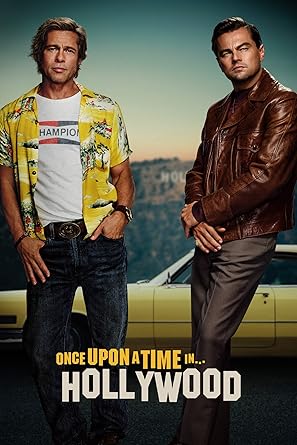
OSCAR WATCH: Once Upon a Time in Hollywood


If there's one thing that Hollywood loves is movies about movies. And if there's one filmmaker who loves making those movies, it's Quentin Tarantino. Famously known as a film nerd, Tarantino's filmography is filled with homages to film history. Whether it's the blaxploitation era in "Jackie Brown" or the spaghetti westerns in "Django Unchained", his love of cinema is always on display. You could therefore argue that his latest Best Picture contender - "Once Upon a Time in Hollywood - represents a culmination of his filmography to date. Chock full with references to classic cinema, Tarantino shows off his film literacy with a comedy-drama that educates as much as it entertains.

Indeed, "Once Upon a Time in Hollywood" is practically a crash course in classic cinema. Set during the late 1960s, it reflects the turning point when Classic Hollywood was making way for the New Hollywood movement which would emerge in the next decade. Incorporating real life figures of the time with fictional characters, the film thus follows a fading star of 1950s TV Westerns - Rick Dalton, played by Leonardo DiCaprio - who struggles to find his place in the new world order. With his trusted stunt double and closest friend Cliff Booth (Brad Pitt) by his side, he attempts a personal reinvention as a movie star. But it will prove to be his greatest challenge yet, as a growing, youthful counterculture threatens to leave him behind.

That tension between old and new hollywood is at the core of "Once Upon a Time in Hollywood", as it serves as a time capsule for a turning point in the film industry. In this regard, Tarantino instills an evocative atmosphere of 1960s Los Angeles, thanks to the music, clothing, sets, and the hair. Oscar nods for the film's aesthetic would definitely be well deserved, particularly for Best Production Design. And Quentin Tarantino will surely garner the respect of his peers in his Best Director bid.

Tarantino's attention to detail brings a tangible authenticity to the settings, augmented by playful nods to films and stars of the era, ranging from "The Great Escape" and "Rosemary's Baby" to "The Wrecking Crew". Indeed, the latter notably draws attention to the subplot involving rising star (played with eager gusto by Margot Robbie). But while initial promos highlighted the ill-fated Tate - and the murderous Manson Family plays a major role in the film - she remains more of a concept than a fully drawn character.

Ultimately, Tate's storyline becomes a casualty of a screenplay that struggles to cohere. As such, the whole is less than the sum of its parts. Thankfully, its best parts truly resonate enough (and will surely push it forward in the Best Original Screenplay race). Namely, the friendship between Dalton and Booth and the charismatic performances from DiCaprio and Pitt. Indeed, Brad Pitt is cool personified in a performance that will likely net him a Best Supporting Actor nomination. Meanwhile, DiCaprio will also garner himself yet another Best Actor nod for his outstanding work. Using every ounce of his physicality and expressive eyes, he is often self-deprecating and vulnerable as a man who must prove to himself and the world that he is a true movie star. Ironically, DiCaprio is effortlessly charismatic in the role, once again proving his movie star bona fides. And perhaps that's the essence of the film and Hollywood itself. No matter the era, it's a town built on make believe and only the most convincing imposters survive.