Showing posts with label A ROTTEN TOMATO. Show all posts

Sunday, October 7, 2018

REVIEW: John McEnroe: In the Realm of Perfection


Restrained, respectful, sedate. Those are hardly words you’d use to describe the notoriously rambunctious tennis legend John McEnroe. But such is the surprising approach taken toward this outsized personality in the Julien Faraut documentary “John McEnroe: In the Realm of Perfection“.

Read more at The Awards Circuit

Tuesday, October 3, 2017

REVIEW: Kill Me Please


At once lurid and aloof, “Kill Me Please” is a truly puzzling film. A debut feature by Brazilian director Anita Rocha da Silveira, this genre mashup takes a simple horror premise and takes it to unexpected places. But while its varied themes and styles are ambitious, the film never fully coheres to pique audience interest.

Read more at The Awards Circuit

Thursday, October 6, 2016

REVIEW: From Afar


“From Afar” begins with a middle-aged man prowling the streets of Caracas. He is looking for a young man to bring home, using his money as an incentive. He finds one and pursues his catch, successfully luring him for sexual gratification. His arousal is derived from visual stimulation rather than physical contact, however. And similarly, director Lorenzo Vigas takes a conservative approach to this tense drama of male desire.

Read more at The Awards Circuit

Sunday, November 29, 2015

REVIEW: Catch Me Daddy


Alfred Hitchcock thrilled us with "The 39 Steps", Arthur Penn changed the game with "Bonnie and Clyde" and Terence Malick made a legendary debut with "Badlands". These are some of the greatest films of all time, but they also share a common theme of lovers on the lam. Daniel Wolfe therefore had a lot to live up to with his debut feature "Catch Me Daddy", a thriller about two young lovers on the run from their family and their past. Despite his admirable efforts however, Wolfe's gritty ambitions yield underwhelming results.

"Catch Me Daddy" centers around Laila (Sameena Jabeen Ahmed), a young woman of Pakistani descent living in Scotland. Alienated from her family on account of her interracial relationship with her Scottish boyfriend Aaron (Connor McCarron), she gets by on a hardscrabble existence, working as a hairdressing assistant while Aaron seeks employment. Their love sustains them however, until her brother and his gang of miscreants decide to hunt her down. Things soon get violent, and the doomed lovers are forced to make a run for it through the perilous Yorkshire Moors.

The success - or lack thereof - of "Catch Me Daddy" rests on the shoulders of its young leads, both making their film debuts here. But whereas the actors themselves have an appealing screen presence, the characters felt vaguely written. Throughout much of the film, I constantly questioned the motives of the characters and as such, I struggled to care about them or their plight. Admittedly, the heavily accented, unintelligible dialogue may have been a factor.

The dialect spoken by the characters speaks to the film's impressive authenticity however. And in that regard, what makes the film most intriguing is the palpable milieu of its setting. Indeed, what the screenplay lacks in clarity, it makes up for in the potent atmosphere of the Yorkshire Moors and its environs. The enveloping fog brings inherent drama and mystery, while the cultural specificity of the urban setting has a unique, vibrant energy. It's hardly surprising that the gifted Robbie Ryan - who shot all of Andrea Arnold's films - is credited as the film's cinematographer. His compositions are as rich and evocative as anyone else in the business.

It's truly a shame that "Catch Me Daddy" is ultimately so underwhelming, as director Daniel Wolfe shows undeniable promise as a filmmaker. His visceral use of sound and imagery certainly delivers its fair share of indelible moments, mostly due to its unflinching eye on the harsh brutality. Indeed, the film's grit and authenticity are beyond reproach. But unfortunately, between the unstimulating leads and their repellent antagonists, "Catch Me Daddy" gave me nothing else to hold on to.

Friday, October 16, 2015

REVIEW: Madame Courage


Back in early September, I fulfilled my dream of attending the Venice International Film Festival. Well...sort of. In truth, I took part in the festivities from the comfort of my own bedroom, as part of the festival's Sala Web initiative, allowing film fans worldwide to view a curated selection of titles from the official programme. This year, I opted for two films - Gabriel Mascaro's "Neon Bull" and Merzak Allouache's "Madame Courage". But while the former was a vibrant piece of world cinema, the latter unfortunately provided a strange situation where its synopsis felt more detailed than the story it actually told.

The plot summary that attracted me to the film reads as follows: "Omar, an unstable and lonely teenager, lives in a slum in the suburbs of Mostaganem, Algeria. He is addicted to a famous psychotropic, nicknamed “Madame Courage”: Artane tablets, very popular among young Algerians, for their euphoric effect of invincibility. Omar is an expert thief. One morning, he goes downtown to commit his usual crimes. His first prey is a young girl called Selma, walking with her friends, prominently wearing a gold necklace. As he commits his larceny, their eyes meet."

Sounds interesting, right? An addiction drama with romance, set against a distinct cultural backdrop. Sadly, the film barely delivers any of the intrigue it promises.

First of all, the film's protagonist is too much of a blank slate. Played unsurprisingly by a first timer (Adlane Djemil), the performance lacks the personality or charisma to justify the dubious premise of the romance. As a result, that aspect of the film remains wholly unconvincing throughout, which in all fairness, has as much to do with the script's deficiencies as it does with Djemil's performance.

As the synopsis explains, Omar commits the robbery in broad daylight quite early in the film. Portrayed as an aggressive, traumatic event, the film struggles to overcome the harrowing nature of this incident to make any sort of romantic connection between Omar and Selma believable. Instead, he comes across as a creepy stalker. In fact, the film makes you wonder whether Allouache is making a judgmental statement about the lifestyle or social class that Omar represents. At one point, he inexplicably gawks at Selma for hours, firmly stationed beside a garbage-ridden dumpster, like a rat in its element. And as if to confirm my assessment of the film's non-existent chemistry, Selma even confronts the persistent Omar during the final act to ask "What's wrong with you? What do you want?"

Fortunately, the film doesn't rely solely on this romance between the thief and his victim. But it even falls short on the more typical aspects of its plot. The effect of the titular drug is virtually indecipherable and the violent crime it frequently depicts is pointless and off-putting. And ultimately, this was the last straw that finally broke my interest in this hapless, unpleasant film.

Sunday, October 11, 2015

REVIEW: Moor


No matter where you go in the world, there always seems to be some amount of corruption involved throughout all levels of society. In Jami Mahmood’s Moor, this corruption relates to Pakistan’s once prosperous railway system, which is now in decline. And in typical cinematic fashion, it’s a zealous expose, but it left me sadly wanting.

Read more at The Awards Circuit

Wednesday, August 19, 2015

REVIEW: Singh is Kinng


They say you shouldn't judge a book by its cover, but after watching Anees Bazmee's "Singh is Kinng" I wish I had trusted my instincts. With its corny title and dubious premise, I didn't expect much from this comic caper and it still managed to disappoint. Starring Akshay Kumar as the titular king, "Singh is Kinng" is a contrived, preposterous farce.

The film is set primarily in Australia, where Punjabi immigrants have taken control of the criminal underworld. At the top of the food chain is Lucky Singh (Sonu Sood), who rules the Sikh mafia. Lucky comes from a village in Punjab, India, where the clumsy but kindhearted Happy Singh (Akshay Kumar) lives. The two are polar opposites, but through a series of mishaps, the men find themselves tied to each other. When the villagers decide that they've had enough after Happy unintentionally wreaks havoc on their community, they devise a ruse to send Happy to Australia to fetch Lucky. Fully expecting the ill-equipped Happy to fail in his mission, they villagers celebrate being rid of their nuisance. Little do they know however, Happy's faults will work to his benefit throughout his journey. Before long, Lucky is conveniently inflicted with an unusual paralysis (leaving him fully conscious but unable to speak) and Happy is named as his replacement. But not before an accidental detour to Egypt where he'll meet a beautiful damsel in distress.

From the time Happy sets out on the plane, "Singh is Kinng" gradually devolves into a rambling mess. In an effort to facilitate his rise to power and his romantic subplot, the narrative resorts to a level of contrivance bound to induce copious eye-rolling. Consider for example, that his eventual love interest - who he meets by chance in Egypt - ends up being directly related to characters he encounters randomly in Australia, one of whom is the person whose ticket he mistakenly took in an airport all the way back in India. I mean, it's a small world, but not that small.

Of course, this is a work of fiction which obviously requires suspension of disbelief. But the sense of serendipity required to pull off such far-fetched shenanigans is lacking, mainly due to the poor acting. Kumar was nominated for an Asian Film Award for his performance and for the life of me, I can't understand why. Though he is undoubtedly an impressive stuntsman, his comedy style feels hammy, like a second-rate Shah Rukh Khan. Kaif meanwhile fails to embody anything other than a pretty face, excelling only in the dance routines where she gets to gyrate and look beautiful.

It's not all bad in "Singh is Kinng" though, as the early screwball scenes in the village are genuinely entertaining. The jokes and sight gags become progressively crude however, reaching the nadir when Lucky gets angry and his blood literally boils to the point where his IV bag explodes. Unfortunately, not even a random Snoop Dogg appearance in the end credits can save such poor filmmaking taste.

This film is part of my Bollywood marathon.

Saturday, August 1, 2015

REVIEW: Dhoom


Nothing says "Hollywood" quite like a big budget action movie. From "Fast and the Furious" to "Mission: Impossible", the American film industry is basically living off the receipts from such popular entertainments. It's no surprise then that the world's biggest film industry (Bollywood) would seek to imitate this phenomenon and thus, similar film franchises like the "Dhoom" trilogy were born. The Bollywood-Hollywood mashup of the first installment however, is an unfortunate example where the formula fails when all the right elements aren't in place.

"Dhoom" largely takes place in Mumbai, where a new motorcycle gang has sprung up on the streets, looting banks and other businesses. They've eluded the authorities with ease and the Assistant Commissioner of Police Jai Dixit (Abhishek Bachchan) has decided that he's had enough. In order to stop the gang's leader Kabir (John Abraham) and his followers, he enlists the help of a pesky thief named Ali (Uday Chopra), who infiltrates the group as a new member. But Kabir has a few tricks up his sleeves, as he aims for bigger targets, including a major casino in the tourist haven of Goa, India. The pressure is on, as Jai and Ali must pool all their skills to stop the criminals from getting away with their biggest heist yet.

Directed by Sanjay Gadhvi, "Dhoom" looks to be crafted as a star vehicle for Abishek Bachchan and John Abraham, with ample gratuitous scenes where they both get to pose and look "cool". This is where the film falters from the outset however, as the star wattage is low with these two performances. Indeed, both actors seem to be approximating their idea of "Hollywood movie star", but their generic takes fall flat, bordering on amateurish. Admittedly, Abraham's does find his bad boy groove towards the end - it helps that he looks the part - but the usually charismatic Bachchan is flat, especially when paired with the cartoonish Uday Chopra as his sidekick. As for the two female characters (Jai's wife and Ali's love interest), they serve no purpose apart from being eye candy as they get drenched in water for no reason. Seriously, both are introduced in musical scenes where they get hosed down and dance in the rain respectively. Oy vey!

This discord between Bachchan's mellow performance and the flashy movie around him, particularly highlights the fundamental clash of styles that plagues "Dhoom". As pure action filmmaking, it lacks the scale and audacity required to get your heart racing. Mired in limp procedural and low stakes motorbike action, the pacing is off and genuine thrills are sorely lacking.

Likewise, as your typical Bollywood musical masala - a uniquely Indian mix of action, comedy, romance and drama - it also fails to entertain. Juxtaposed with the more serious tone of the action-thriller tropes, the haphazard song-and-dance interludes come across as corny, especially since the songs are so forgettable. Mainstream Bollywood films are almost always entertaining if nothing else, so something is clearly not right here.

Essentially, "Dhoom" isn't big enough to replicate Hollywood spectacle and it's not masala enough to have that Bollywood appeal. Though I count myself as a fan of this film's sequel "Dhoom 2" (a major improvement in every regard), I remain baffled that it managed to spawn such a wildly successful franchise (the biggest in Bollywood history). Too frivolous to be taken seriously and too blandly serious to be an effective parody, this bastard child of Bollywood-Hollywood intercourse is stuck in no man's land.

Friday, January 2, 2015

REVIEW: Teeth and Blood


A pair of fresh voices on the indie scene has arrived with the new horror film "Teeth and Blood". This debut narrative feature is co-directed by Al Franklin and Pamela J. Richardson, who previously worked together on the documentary "Gold Diggin': For Love of Money". As you can surmise from the title, this production sees them exploring the world of vampires.

The events of the film take place around a film shoot, after a diva actress is murdered and her body vanishes. Production on the film is halted only briefly however, as the director soon seeks out a replacement. In step undercover detectives Mike Hung and Sasha Colfax, who are brought in to investigate the case. Colfax manages to land the deceased actress' role, while Hung takes up a job as a grip on the set. Things get even more mysterious however, as the city's supply of donated blood is begins to run low. Something's not right about this movie and its crew, but will our detectives figure it out before it's too late?

As this race against the clock ensues, the film juggles its horror elements and typical crime drama procedural to middling effect. Apart from some frightening special effects work on the vampires, genuine scares are rare. Horror films are prone to veer into camp without the right attention to detail and it seems like the low budget was a constraint on this production. It's a case where the visual design (art direction and cinematography) struggles to convey the requisite sense of dread and fear.

The film does fare better as a murder mystery, though only marginally. Sean Christopher and Michelle Van Der Water are well-matched as the detectives, but the screenplay fails to harness the potential of this dynamic duo. In general, all the characters are bit too broadly sketched for my liking.

Yet what it lacks in atmosphere and character development, it compensates for in - for lack of a better word - swagger. Unlike most other horror films (or mainstream films in general), this urban-set tale features a predominantly black cast. Rather than being relegated to minor supporting roles, these actors are given the chance to play the main protagonists and villains. In doing so, the colorful characters bring a unique flavor to the horror genre. Notably, Van Der Water fierce confidence and sensuality is reminiscent of Sharon Leal, while King Kedar amuses as an outlandish pimp who's aptly named Ghetto Vampire. This fresh approach is a welcome change which is enough to make the film worth your time. "Teeth and Blood" probably won't be giving you any nightmares but it offers a vital new perspective.

"Teeth and Blood" is now exclusively available for digital streaming on Urban Movie Channel.

Saturday, November 15, 2014

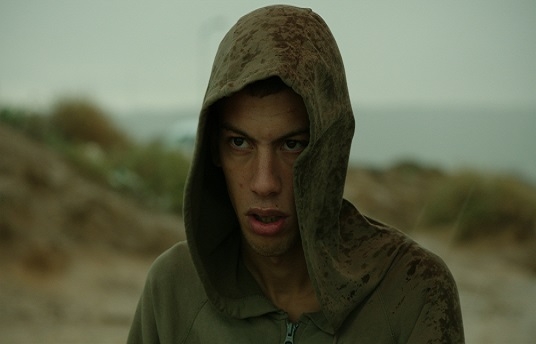
A ROTTEN TOMATO: Silence in Dreamland


Some films have poetic titles just for the sake of it, while others possess a literal meaning in the context of the film. Tito Molina’s aptly named "Silence in Dreamland" is one of the latter. In this arthouse drama, words are few and dreams are a welcome escape.

Read more at The Awards Circuit

Wednesday, September 10, 2014

A ROTTEN TOMATO: Borgman


It's that time of year again, when all the snobs complain about the "Oscar bait" films being unleashed at the various fall festivals. Once an easily identifiable descriptor, the term has proven to be increasingly meaningless over the years, seeming to encompass any drama film that becomes popular. As an awards fan, it should come as no surprise that I'm one of those who embrace the prestige drama. However, as I sat down to watch Alex van Warmerdam's "Borgman" recently, I realized that there is some truth behind the derogatory term.

In most Hollywood productions, there are clear distinctions between good and evil. Not just from the audience's perspective, but also for the characters in the film. Each role is motivated by a the character's personal philosophy and outlook. It's how we know who are the protagonists and antagonists. But what happens when there aren't these opposing forces? What if the evil trounces the good without any cause? Well, that's exactly what we get in "Borgman", a largely cruel story that pushed me too far out of my comfort zone.

When we first meet the titular Camiel Borgman (Jan Bijvoet) he seems fairly innocent, pitiful even. Residing in an underground makeshift home, he is chased away by a group of unidentified armed men. After making his escape out of the woods, he eventually arrives at the home of a wealthy family and asks for a bath. As expected, the owners Richard (Jeroen Perceval) and Marina (Hadewych Minis) refuse the unkempt stranger. Borgman is resolutely determined though, so he makes up a story about being formerly nursed by Marina in a past life. She promptly denys it, but is unable to alleviate her husband's suspicions and things escalate. Soon, Richard has attacked Borgman, leaving him unconscious. When Marina returns to tend to him, he has vanished. Little does she know that he will soon return, infiltrating her home to covertly upend everything in her life.

Borgman embarks on his sinister plan by cleaning himself up and appealing to Marina's feelings of guilt. He manages to befriend her and convince Richard to hire him as their new gardener. With seemingly good intentions, he even forms a bond with their 3 young children and the nanny. Soon enough, everyone is under his spell (except for Richard) and he unleashes psychological terror that manifests itself in deadly ways.

Like Marina, I was initially entranced by Borgman. The burgeoning relationship between the pair had me invested, curious to understand his peculiar behaviour (as well as that of his accompanying team of sociopaths) and her perplexing fascination with him. There are no false notes in either performance. This is especially true of Minis, conveying a woman who is brimming with inner life. It's too bad that the script forces her to become frustratingly foolish in order to facilitate its overly sinister endgame. What started out as a darkly comic antagonism of the comfortable middle class becomes something that is off-putting with its nihilism. As such, it lost any allegorical power it aspired to.

There's certainly a lot of originality to admire in "Borgman". Despite the distinctive images and interesting performances though, it ended up feeling like too much purposeless shock value. Perhaps I'm just not ready for this level of "art film". Maybe if you wrap this up in a more moralistic "Oscar bait" package I'd be on board.

Sunday, July 13, 2014

A ROTTEN TOMATO: Transcendence


When coming up with my list of Most Anticipated Films of 2014, one film that stirred my interest was Wally Pfister's directorial debut "Transcendence". After years of working closely with Christopher Nolan (one of my all-time favourite directors), I figured he must have learnt something from that modern genius. Sadly, that wasn't the case as this film turned out to be a major disappointment.

On the surface, it's easy to see why Pfister would be interested in this script (a 2012 Black List honoree no less). This story about a scientist named Will Craster (Johnny Depp) whose consciousness gets uploaded into the powerful artificially intelligent computer which he created, is just the kind of material that he worked on for years with Nolan. Based on complicated science surrounding "technological singularity", it's a premise that one could envision Nolan exploring with exhilarating results. Of course, this isn't a Nolan film and Pfister's shortcomings as a director (as well as Jack Paglen's poor writing) are self-evident here.

"Transcendence" springs into motion following a lecture where Will Caster (Depp) explains his project (along with his wife Evelyn, played by Rebecca Hall) about creating sentient technology that surpasses human intelligence. In the aftermath of his presentation, he is shot in protest by a group called R.I.F.T. (Revolutionary Independence From Technology) who oppose the "godlike" intentions of the technology. Discovering that the bullet is laced with radiation poisoning, Evelyn decides to upload his consciousness to preserve his "being" before he dies. With the reluctant help of fellow researcher Max Waters (Paul Bettany), the plan works, effectively bringing Craster back to life. Hooked into our worldwide network of technology thereafter, he becomes increasingly powerful.

As with any sci-fi thriller, there are inevitable complications. It starts out well, as Will and Evelyn invest in a highly advanced technological facility in the desert, improving various fields of science, like biology, nanotechnology and medicine. However, when Evelyn realizes that his powers extend to analyzing people's minds, she realizes that they may have gone too far.

Well, she was right. Like this Transcendence project, the script overextends itself to absurdity. Mainly, it takes a lot of narrative shortcuts (like lazy usage of "X" years later to skip the explanation of the technology) that keep the audience at a distance from the core premise, no matter how fascinated you may be. For a film that is rather long (about 2 hours), there's a perplexing lack of actual "stuff" happening. By the time you reach the point where there's a fairy dust substance being dispersed throughout the world, the film starts to feel more like magical fantasy than intellectual science fiction.

Apart from these conceptual absurdities, the film's greatest offence is its false advertising. Now, I won't go as far as suing the filmmakers but a plot that involves an assassination attempt, revolutionary technology gone awry and FBI investigations, has no excuse for being this dull. In fact, one would find it difficult to even consider this a thriller, as its trailers would suggest. Throughout the film there are many mentions of impending danger, yet we see no urgent conflict until the final act. Somehow Pfister expects to keep our attention without giving us anything exciting to engage with (visually or thematically) for the majority of the running time.

To add further insult to injury, the film is capped by a Nolanesque poignant ending that is completely unearned. With little engagement with the science or the dynamics of the central romantic relationship, it leaves you annoyed rather than invigorated as clearly intended ("look, isn't this clever?"). No thanks, I'll take "Inception" and its spinning top instead.

There's no denying that making the switch from cinematography to directing is a major step, and I commend Wally Pfister for giving it a go. However, the bland outcome of this effort indicates that he may not be up to the task. The good news is that he remains a talented cinematographer, so this is just a bump in the road in an otherwise impressive filmography. Maybe with some more mentoring in the art of directing he can actually make a good film from the director's chair in the future.

Saturday, July 5, 2014

A ROTTEN TOMATO: G.B.F.


Earlier this week, I commented on the propensity for moviemaking trends to repeat themselves in terms of the scale of blockbusters. Upon watching the 2014 film "G.B.F." (an acronym for gay best friend), I'm now also reminded of the propensity for filmmakers to borrow elements from other films that came before. In the case of this film, it's the highly regarded "Mean Girls" of 10 years prior from which it draws its influences. Unfortunately, in trying to replicate that film's success, "G.B.F." fails to carve out its own identity, even though its premise suggests something new.

Said premise of "G.B.F." is a high school coming out story. It centers around a reserved young man named Tanner (Michael J. Willett), who reluctantly gets outed by his school's Gay-Student Alliance in their quest to recruit the first gay person into their club. Unfortunately for them, a trio of popular girls have other plans. As prom night approaches, they all compete for Tanner's affections, hoping that a gay best friend will increase their chances of winning prom queen. Unable to settle it fairly, they devise a win-win situation where Tanner befriends all three in exchange for protection from the school bullies. Of course, complications arise as the girls struggle to share their new accessory and Tanner's new clique puts a strain on his relationship with his former best friends (one of whom is also gay).

On paper it all sounds like a fresh perspective on the high school comedy, placing a gay character front and center. It seemed like an opportunity for some interesting insight into the young gay perspective but sadly, the film feels like a rehash of storylines we've seen before. The most apparent comparison is of course, "Mean Girls". There are similar plot points and the characters are almost the same - a "fish out of water" protagonist, three popular girls (the pretty but mean queen bee, the ditzy one and the undervalued one who's jealous of the queen bee), the unpopular best friends and the concerned teacher with a heart of gold. It doesn't help that the film also actively acknowledges "Mean Girls" too, referencing Lindsay Lohan and the "things I've learned" prom speech.

Sadly, the film didn't steal any of that film's finer qualities outside of its basic structure. From the first scene there's a fakeness to the setting that makes the film hard to take seriously. There's just no sense of place (sometimes it feels like a liberal northeast school and other times it could pass for a conservative red state). It also lacks visual flair, with hardly any physical comedy to stimulate the senses. Sorry George Northy (the screenwriter), but there's nothing inherently funny about two gay boys having a private bedroom dance party. Without the sight gags, it tries to compensate with the writing, but it lacks the invaluable wit that Tina Fey gave to her film. I can count the funny lines of dialogue on a single hand. As such, everything just falls flat and that includes our protagonist. One could argue that Willett's bland acting is intentional (he doesn't conform to the effervescent gay stereotype) but he seriously brings down the film's energy.

Tanner's dullness further exacerbates the film's "Mean Girls" problem. Specifically, the most intriguing characters end up being the three girls rather than the central character. Queen Bee Fawcett is smarter than she appears, token black girl Caprice is a champion of equality and Shley is a conservative Mormon girl who proves to be surprisingly tolerant and adventurous. They all have more depth than Tanner, who's only defining characteristic seems to be his sexuality. Yet still, the writing refuses to commit to these characters, only allowing Fawcett to get full character development. There's a fascinating opportunity with Caprice (at one point she's offensively referred to as a sassy black friend) to mirror Tanner's experience with societal pigeonholing, but it's never properly explored. Meanwhile Shley is saddled with all the narrative cliches of being ditzy, drunk and sexually frustrated. It's evident that the script should have narrowed its focus on either the gay teen's coming of age or the politics of high school girls running for prom queen.

There's a worthwhile story to be told from the idea of "G.B.F.", but this film fails to deliver it. Instead, this is nothing more than a poor man's "Mean Girls". If you count yourself as one of the many fans of that film, then I'd recommend watching that rather than wasting your time with this uninspired effort.

Wednesday, May 14, 2014

A ROTTEN TOMATO: Redlands


If you weren't already aware, there's a bustling movement of underground indie cinema, producing films that you never hear about. One of these is John Brian King's "Redlands", a dark drama released earlier this year. This contained narrative uses a small cast with 3 main characters and is unlike anything you'll see in the multiplexes.

The story begins by introducing us to Vienna - Nicole Fox, of "America's Next Top Model" fame - as she records one of her frequent vlogs. She appears to be a cheerful girl with aspirations of becoming a model. Everything seems normal at first until we see her at her first photo shoot. It turns out that she wants to be a "glamour" model, posing nude for amateur photographer Allan (Clifford Morts), much to the chagrin of her boyfriend Zack. He protests intermittently, but he benefits too much from her earnings (to fund his music career) to seriously object. It's plain to see however, that there's something fishy about the whole situation (the photographer doesn't even have professional equipment), but Vienna's too naive to realize it. As Vienna develops a close work relationship with Allan, the plot slowly ambles down its increasingly dark path.

"Slow" is indeed the key word to describe this film. If there's one thing you'll take away from this viewing, it's the value of a good editor. Sadly, this film was sadly lacking in that department. It's filled with so many agonizingly long, uninteresting scenes that it almost becomes unbearable. The script is just so underdeveloped that you can feel the actors straining to make it work.

It's a shame really, as the characters have some amusing traits that could have been put to good use with a better script. Vienna is naive and slightly delusional, Zack has a vulgar, dirty mouth and Allan is an insensitive sociopath. Of the trio, only Vienna and Allan get any true character development, though the resolutions of their individual character arcs are less than satisfying. Zack meanwhile turns out be completely inessential to the plot. Still, based on the way the characters are written, I think the premise could have worked well as your standard dark comedy. Unfortunately, it tries to be a provocative art film but it just doesn't have the goods (it's way too dialogue-heavy for that).

There are glimmers of a quality film throughout "Redlands" (humourous dialogue, intriguing characters) but these are few and far between. I really wanted to get on board with it, but this foray into micro-budget filmmaking left me drifting. Perhaps you'll manage to get more out of it than I did. "Redlands" is now available on Vimeo On Demand and Amazon Instant Video.

Tuesday, April 1, 2014

HIT ME WITH YOUR BEST SHOT: Can't Stop The Music


In honour of April Fools' Day, Nathaniel chose a perfectly silly film for Hit me with your best shot this week - 'Can't Stop the Music'. This story about the formation of The Village People holds the inauspicious title of being the first winner of the Golden Raspberry for Worst Picture. It doesn't come as much of a surprise after watching it, as it really is hilariously awful (emphasis on hilarious). There are so many things wrong with this film but it's also a lot of fun, very much in the spirit of The Village People. Indeed, the plot has a lot of visually amusing things going on, but there was no doubting which scene would contain my best shot. It comes from the moment that I was personally anticipating the most - the performance of "Y.M.C.A.".

Click below for my favourite shot...

Thursday, March 20, 2014

A ROTTEN TOMATO: Nymphomaniac: Vol. II


Continuing his two-part sex addiction saga, Lars Von Trier goes to some dark places in "Nymphomaniac: Vol. II". Clearly he was just getting warmed up, as the lead character's escapades become more intense and severe. As with the first installment, it's uncensored and shocking, but does the prolonged storytelling sustain its intrigue?

It's perhaps pertinent to state that I liked "Nymphomaniac: Vol. I". I found it mostly captivating, partially due to the novelty of its explicit approach and also due to the daring artistry employed by Von Trier. However, after seeing these two films within quick succession, it soon became clear that the plot isn't nearly has substantive as one would hope.

The film picks up from its prequel where our lead character Joe is suddenly unable to feel the sensations of sexual activity. Shattered by this misfortune, she decides to challenge herself by engaging with even more extreme behaviour than we'd witnessed previously. Eventually, Joe's sexual desires end up incorporating pain (through BDSM) and it's around that point where the film becomes tiring. As we follow her descent into darkness, the barrage of unpleasant imagery just becomes too much. What started out as a fascinating artistic endeavour eventually devolved into a case of overindulgent filmmaking.

Indeed, the style of the film certainly reflects an auteur's vision and it was a strong reminder that I was lacking in my knowledge of the director's work. Perhaps I should have expected something more like "Antichrist" rather than the more thematically-rich and narrative-driven thrills of "Melancholia". Prior to this pair of films, I had only seen "Melancholia" from Von Trier's filmography so I never fully understood his reputation for putting his actresses through hell for the role. In that film, the challenges placed on Kirsten Dunst (in a brilliant performance) seemed like they were geared towards testing her emotional depth. In this case though, it actually felt like Charlotte Gainsbourg was going through a torturous experience. Many of her present-day scenes with Skarsgaard are delivered in a subdued, mundane manner, while her flashbacks seemed to be just a series of endless discomfort. As a result, it never felt like a performance that required much skill. Like the plot, there wasn't much substance in the acting under all the surface-level shock value. I hate to use the word pretentious, but the philosophical analyses of Joe's sex life, in addition to the convenience of the narrative device (Joe's confidant Seligman seems too perfectly matched for a random savior), were the source of much eye-rolling. If this is what his other films are like, then maybe Von Trier's brand of filmmaking just isn't for me.

Early on in this duology, Joe establishes her perspective by claiming that her only sin is that she always "demanded more from the sunset". The statement seems to suggest that we are dealing with a woman with vitality and a passion for life, explored through an unquenchable desire for sex. However, by the time we reach the events of Vol II, the character seems to be handicapped by this addiction, unable to truly live her life to the fullest. Perhaps that's the point, but for the audience member it results in a film that ultimately fails to stimulate.

Thursday, February 27, 2014

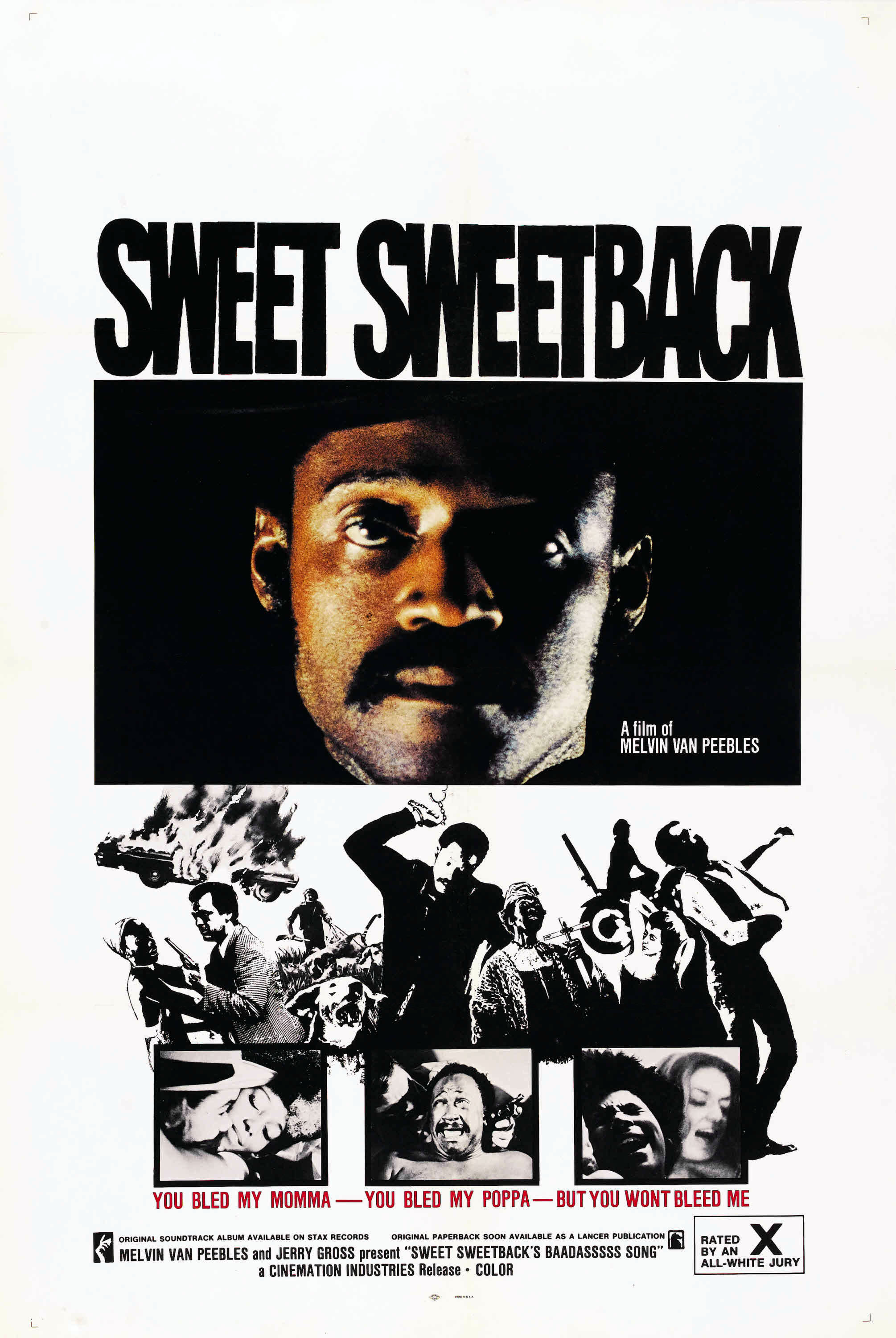
A ROTTEN TOMATO: Sweet Sweetback's Baadasssss Song


This week I decided to stray into the realm of avant-garde with "Sweet Sweetback's Baadassssss Song". It's said that this is the seminal blaxploitation film, so I naturally I was curious to check it out. Well, I'm sorry to report that I was wholly turned off by what it was trying to do.

What is the film trying to do? Well, that's a good question. After enduring this film for 97 minutes, I'm still unclear as to its intentions. From what I recall, there's a man named Sweetback (Melvin Van Peebles) who's good in bed and is a known badass. Due to his badassness, he gets into trouble with some racist cops (he attacks them after they beat up a black man), forcing him to go on the run. Throughout his great escape, he is aided by "the black community" (literally, the opening credits state "Starring: The Black Community"), positing the theory that all black people need to work together to fight "the Man". Certainly, there was some legitimacy to this claim during that era (the early 1970s), but the imagery this film focuses on created some insurmountable problems for me.

Within the opening minutes of the film, we are privy to a young boy (Sweetback) being forced to have sex with an older woman. He grows up to be a prostitute, engaging in exhibitionist sex in front of crowds of people. There's no reason for it, leaving me to assume that it's only there for the shock value. All throughout, it portrays black people in an unfavorable light, seemingly at odds with the message it claims to convey. When it's not depicting vulgar acts of public indecency, it's preoccupied with strange scenes like a heavyset man taking a dump. So on the one hand, it's employing a bold experimental filmmaking sensibility but conversely, it's also attempting to tell a linear story with a black power message. Unfortunately, the two styles don't mix.

In the end, it all comes across like the work of a filmmaker who's trying too hard. With its murky cinematography and muddled script, it feels more in line with a scrappy student film than a serious production. I give the director points for trying something different within the confines of conventional black cinema, but the finished product fails to be artistically or thematically engaging. For a film that supposedly speaks for the entire black community, I think we deserve better.

This film is part of my Black Cinema marathon.

Wednesday, February 12, 2014

A ROTTEN TOMATO: The Nutty Professor


The Adam Sandler brand of dumb comedy is widely viewed (by cinephiles) as a plague on contemporary movie culture. However, after watching Jerry Lewis "The Nutty Professor", I can confidently say that there has been and always will be an audience for that kind of humour. It's a sad truth but thankfully, smart comedy is also still being made. Of course, silly humour can be satisfying when done right, but usually the jokes are so broad that it eventually outstays its welcome. In the case of "The Nutty Professor", it's most definitely the latter.

You're probably already familiar with the plot of this film, due to the 1996 Eddie Murphy remake. If you've managed to avoid it however, then here's a quick rundown. The title character (played by Jerry Lewis) is a nerdy professor who is clumsy and socially inept. He gets no respect from his students and his love life is non-existent. After being locked up in a closet by a bully one day, he's aided by a kind, attractive woman from his class (Stella Purdy, played by Stella Stevens). Smitten by her obvious interest, he begins to wonder what it would be like to be her man. Unfortunately, he feels unworthy of her so he uses his brains to devise a solution. He ends up creating a potion that will transform him into a smooth, confident stud. There's one big side effect though. His alter-ego Buddy Love is an arrogant jerk. As you can probably tell, the film aims to send the message that inner beauty is what matters. Unfortunately, the film compromises that message by some curious filmmaking choices throughout.

Firstly, Lewis' performance as the professor is grossly extreme. We're meant to root for him but he's made out to be such a complete (and often annoying) dope, that it's hard to attach yourself to the character. In fact, I'd prefer to be around Buddy Love, flaws and all. Still, even that character has its issues, which relates to my other major complaint - the writing.

The writing certainly leaves a lot to be desired, mainly due to some troublingly archaic representations of male-female relationships. In particular, the first meeting between Stella and Buddy is bizarre. She's a headstrong girl who clearly isn't flattered by his courtship, but she still manages to end that night cooped up with him some dark, lonely hideout! As I mentioned earlier with regards to the professor, the film's characterizations are very broad and hence, Buddy is played as quite the obnoxious creep. I swear, if it weren't for the Motion Picture Production Code, I would have been worried that a rape was about to occur. In the context of this patriarchal world though, it seems quite normal for a girl to submit herself completely to the domineering man. Perhaps I'm applying too much of a modern perspective, but it's something that really irked me thoughought (even in her relationship with the professor).

Great comedies tend to reveal some amusing truths about human behaviour and society (even at their most slapstick). Sadly, this film is too far removed from reality to realize its full potential. Jerry Lewis is clearly a talented physical comedian, but the nonsensical material he gave himself (he's the co-writer) does him a great disservice. This professor is definitely nutty, but he's also a bit unbearable. Clearly, the film has failed its purpose. The remake is better. There, I said it.

Wednesday, February 5, 2014

A ROTTEN TOMATO: I, Frankenstein


As you've probably noticed by now, I usually only write reviews for films that I like. There are two main reasons for this. First of all, I find it much easier to explain why I like something. In addition, I tend to avoid films that I suspect I'll hate. On the rare occasion that I encounter a film that I truly dislike (less than 2.5 stars), I give it a review on the "A Rotten Tomato" label. I mention this because the relevant film for this post is one that strongly reminds me why I've taken this stance. "I, Frankenstein" is a middling film that is as unimpressive as you've heard.
The film features a convoluted plot that focuses on Frankenstein's monster (named Adam here), played by Aaron Eckhart. After being rejected by Dr. Frankenstein, Adam kills the doctor's wife, spurring on another act of revenge. As Frankenstein chases his creation through an Arctic chill, he eventually dies, leaving the Adam to roam free. Adam decides to bury his creator, but is attacked by gargoyles who try to recruit him to fight some demons on earth. This progresses into a centuries-long war between these varying factions culminating in the modern day events of the film.
Yes, it all sounds layered and complex but don't be fooled. This is a "bare bones" script that only exists to set up the situations for a stream of derivative action scenes. There are promising elements due to the various characters and the moral conflicts at play, but this film is mostly concerned with its surface-level visuals. Admittedly, this special effects bonanza is occasionally thrilling but it's also so painstakingly juvenile in execution (dialogue, characterization) that it's hard to respect the filmmaking. The most egregious offense is the waste of a talented cast, namely Aaron Eckhart and Bill Nighy. As one of the top character actors in the business, it's sad that there's no specificity given to Nighy's villain role. Likewise, Eckart's lead character is altogether too bland to stir up much excitement.
In effect, "I, Frankenstein" is essentially a B-movie hiding behind a blockbuster VFX budget. This is particularly evident in the overblown finale where fireballs and grotesque creatures incoherently collide in a big final showdown. At the end of the film, it gives you a sort of hangover feeling as you regret the excesses that you just experienced. The lack of background story and thematic depth often makes it feel like a TV episode or a middle film in a franchise. Perhaps I would have been satisfied if it were in either of those forms. As a standalone feature film though, I can't help but see this as a failure.

Friday, January 31, 2014

A ROTTEN TOMATO: Fresh


The modern struggle of urban African-Americans has been ripe for cinematic adaptation, particularly after Spike Lee's emergence in the 1980s. Other black filmmakers followed his lead, notably John Singleton with his Oscar-nominated film "Boyz n the Hood". On rare occasions, non-black filmmakers have also become interested in this sub-genre. This is the case with the 1994 film "Fresh", penned and directed by Israeli-descendant Boaz Yakin, who grew up in the inner city himself.

The film tells the story of a 12-year-old boy nicknamed Fresh (Sean Nelson) who lives in the projects, with a slew of cousins and his aunt. Hustling to survive, he becomes a street smart drug dealer making connections with all the major players in the game. Constantly reminded of his deadbeat father (Samuel L. Jackson) and junkie older sister, he slowly decides to seek a way out of his circumstance before it's too late. Of course, his youth limits his freedom and independence, so he needs a catalyst to achieve his desire.

This premise is perfectly fine (though no longer fresh, excuse the pun) but it's the way it's constructed that has resulted in the "A Rotten Tomato" label rather than a "Movie of the Week". In order to arrive at the film's conclusion, the plot needs some catastrophic events. As you can expect from the drug and poverty elements, that means that people need to be killed. This is understandable, but it seems to put the film in a conundrum. The violence is inevitable, but I found that all the human sacrifice seemed harshly preordained to achieve the story's endgame. The plot is filled with random acts of malicious gun violence towards children (and helpless animals too) that just left a sour taste. As the plot trudges along I understood that it reflected reality but I also wondered, to what end? Yakin's filmmaking sensibilities aren't sophisticated enough to convey a docudrama feel (his intrusive score prevents that) and the dialogue is too on the nose to have enough potency for a "message" film.

The only persons who really brought their A-games are the actors, mainly Sean Nelson, Giancarlo Esposito and Samuel L. Jackson. Even though his character (an aimless chess wiz) feels like an afterthought, Jackson brings his natural charisma to the role. Likewise, Esposito showcases his now famous ability (thanks to "Breaking Bad") to make his villains thoroughly magnetic (perhaps even more so in this instance, given the character's sexual edge). The real find however, is debut actor Sean Nelson in the title role. He projects a remarkable confidence that goes a long way in making the character seem plausible.

Despite this breakout central performance and a few strong moments, I still find it hard to really warm to this film. There's just something icky about the determined nihilism, especially as it comes from the perspective of a 12-year-old. In one scene after a particularly damaging incident, Fresh's mother tells him he should have known better. In much the same way, I found myself questioning the the motives of the film's writer-director. He has a good basic premise, but his execution pales in comparison to the works of Spike Lee, John Singleton et al. I'd recommend watching "Boyz n the Hood" instead.

This film is part of my Black Cinema marathon.