Showing posts with label Best Editing. Show all posts

Wednesday, December 11, 2019

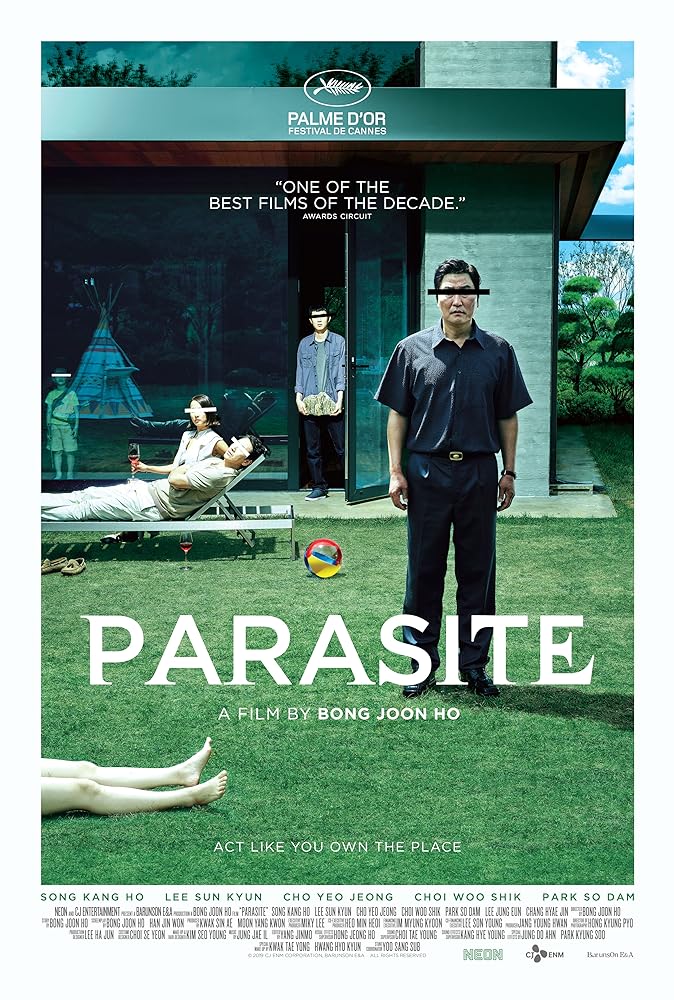
OSCAR WATCH: Parasite


Of all the memorable movie moments of 2019, there's one in particular that I haven't been able to shake. It comes in a climactic scene in Bong Joon-ho's ingenious social satire "Parasite", as class revolt within the narrative comes to ahead in response to a insulting gesture. Though the film pits the %1 against the disadvantaged poor, this scene's power comes from the way it forces middle class audiences to confront our own insensitivities.

Elaborating further on the scene would unfortunately ruin one of the film's key attributes. Indeed, "Parasite" succeeds largely on its suspenseful and utterly unpredictable screenplay. While its premise may seem like a variation of Robin Hood's "stealing from the rich to give to the poor" premise, it reveals much deeper levels as the plot unfolds.

The story surrounds two families, the wealthy Parks and the unemployed Kims. Desperate to find work, they get a lifeline when the son Ki-woo secures a tutoring job for the Parks, through the recommendation of a friend. Ever the opportunist, his arrival at their upscale home quickly sets off a light bulb in his head. Before long, he schemes to get the rest of his family to infiltrate the home by offering various household services. But the Park home harbors secrets which could completely derail their plans.

Bringing new meaning to social hierarchy with its darkly comic take on the "upstairs, downstairs trope", Bong Joon-ho's "Parasite" offers an incisive critique of class in South Korea. Much like his previous genre-inflected social satire "Snowpiercer", Bong Joon-ho uses entertaining scenarios to convey his message. As the Kims speedily take advantage of the opportunities presented to them, "Parasite" is crafted with the blistering pacing and brilliant dialogue to match. And through the efforts of a superb ensemble, the personas they embody further emphasize the wide chasm between the classes. As the mother of the Kim clan remarks of her aloof Park counterpart, she is "nice because she's rich."

As the plot twists and turns to thrilling effect, Bong Joon Ho never loses sight of the film's central anti-capitalist themes. Conveyed visually and verbally with the utmost panache, the result is a film which is universally relevant and impactful. It's therefore no surprise that it's receiving serious Oscar consideration for Best Picture, Best Director, Best Original Screenplay, Best Editing, Best Production Design and Best International Feature. With its strong social commentary and thrilling storytelling,  "Parasite" is truly one of the year's must-see films.

Tuesday, December 3, 2019

OSCAR WATCH: The Irishman


A decade ago, the BAMcinématek curated a series called "The Late Film", a collection of late career films from established auteurs. As described in the New York Times, the term refers to work that is "both familiar and strange, characteristic of the artist and yet markedly at odds with everything that preceded it." As I watched the latest from American master Martin Scorsese, the descriptor could not feel more apt. Among Scorsese's esteemed canon of gangster films, "The Irishman" expresses familiar themes in profound and revelatory ways.

In my review from over 5 years ago, I marvelled at Scorsese's direction of "The Wolf of Wall Street", impressed by its audacity and edgy, kinetic style. It felt like the work of a younger, maverick filmmaker, proving that he was still a vital voice in the contemporary film scene. Four films later, I am stunned once again by "The Irishman", which sees Scorsese reuniting with many of his most famous collaborators. This epic surrounds Robert DeNiro's titular character Frank Sheeran, as he reflects on a life of mob-related crime. From his younger years as a truck driver, to his subsequent rise up the ranks of the Buffalino crime family, his story is one of violence, greed and power. But in his dying days, the events of his life weigh heavily on him.

With this premise and the recognizable director and cast – including Al Pacino and Joe Pesci in supporting roles – you'd be forgiven for thinking this is just another Scorsese gangster flick. But "The Irishman" deepens the genre through a directorial approach that is more subdued and graceful. It feels in direct conversation with the aforementioned "Wolf of Wall Street", as well as the other iconic gangster narratives that came before for it. Indeed, while "Wolf of Wall Street" was accused of glorifying the debauchery of its immoral men, "The Irishman" is never gratuitous, filled instead with an undercurrent of regret. Though violence are central its themes, the film is more concerned with the impact rather than the act.

One particular scene stands out, where Al Pacino's Jimmy Hoffa, desperate to reclaim leadership of the mob-controlled union remarks to Sheeran that "They do something to me, I do something to them. That's all I know. Nothing else." Epitomizing the endless cycles of violence and revenge (also emphasized through frequent pop-up subtitles about various characters' future demises) it achieves a rare emotion for audiences in a gangster film – pity. And as the decades-long narrative of "The Irishman" plays out, this sentiment only deepens as the bodies pile up and families and friendships are irreparably broken.

The result is an uncommonly calm and contemplative gangster film from Scorsese, with the screenplay's themes amplified by impeccable acting - particularly the soulfully captivating DeNiro and the chillingly unflappable Pesci - and Scorsese's usual attention to detail. Oscar nominations are definitely on the table in the categories of Best Director, Best Actor, Best Supporting Actor, Best Adapted Screenplay, Best Editing, Best Makeup & Hairstyling, Best Production Design and Best Picture. Admittedly, it's still not my favorite of the year, but I wouldn't begrudge any of these wins. It's truly exciting to see Scorsese continue to be so inspired and invigorated (this year he also directed the impressive documentary "Rolling Thunder Revue: A Bob Dylan Story"). Unlike Frank Sheeran's life story, this film may be a late work, but it's far from a swansong.

Tuesday, November 26, 2019

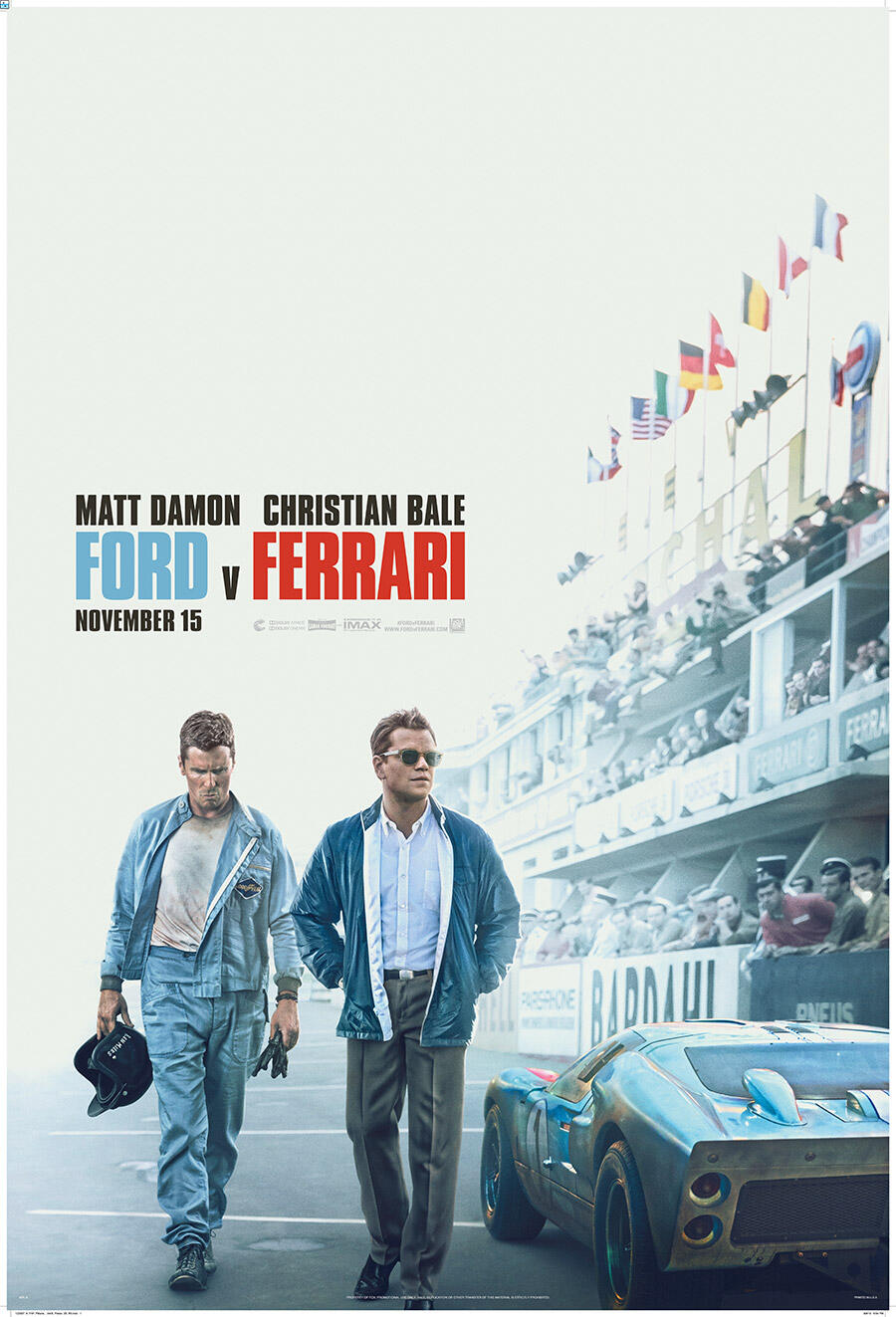
OSCAR WATCH: Ford v Ferrari


As Henry Ford II - aptly portrayed with gruff egomania by Tracy Letts - proudly reminds us in "Ford v Ferrari", the invention of the automobile (especially those made by Ford) completely revolutionized modern society. In the proceeding decades, a love affair with cars has been a staple element of consumerism, particularly for men. Today, those earliest wagon-esque models have evolved into sleek sports cars, prompting an obsessive "need for speed" as chronicled in this gripping new film from director James Mangold.

As the title suggests, "Ford v Ferrari" depicts the true story of the battle between rival automotive makers Ford and Ferrari. Representing the best of American and Italian innovation, they were at the forefront of the industry, with Ford representing the populist choice for everyday consumers and Ferrari representing the cutting edge of speed-oriented technology. As the 1970s approached however, Ford began to feel its influence fading. New generations craved forward-thinking style and sophistication, rather than boxy models that came before. So Ford hatches a daring plan to design a car to beat Ferrari on their most dominant stage - the 24 Hours of Le Mans race in France. Under the advice of a determined automotive designer/engineer named Carroll Shelby (Matt Damon) and his unpredictable but extraordinary driver Ken Miles (Christian Bale), they set out to secure bragging rights and ensure the viability of the company.

Unsurprisingly, "Ford v Ferrari" shines brightest when its on the race track, appropriately delivering edge-of-your-seat thrills with slick production values and nail-biting stakes. The film will surely figure into the Oscar races for Best Sound Mixing, Best Sound Editing and Best Editing. It gives you a visceral sense of the power of these cars and the real dangers being faced every time someone gets behind the wheel.

Indeed, while the film duly indulges the male fantasy of automotive prowess, the more unexpected grace notes are its elegant screenplay and strong character development. As the wily Ken Miles, Christian Bale turns in a performance as finely tuned as his souped-up Ford, combining lived-in naturalism with a distinctive persona. Likewise, Matt Damon's monologues about the existentialist experience of driving a car are a highlight of the film. If "Ford v Ferrari" were to net an Oscar nod for Best Original Screenplay, it would be due in large part to his eloquence.

Ultimately, "Ford v Ferrari" succeeds for its sincere empathy towards the relationships between men and their cars, and each other. Its depiction of masculinity, pride and male friendship feels authentic to the way men express their feelings. As the plot races to the finish line, those withdrawn emotions will likely catch up with you. For all its masculine bravado, this Best Picture contender turns out to be one of the most heartfelt films of the year.

Sunday, September 29, 2019

TIFF: Jojo Rabbit


With a filmography that includes such heartwarming comic gems as “Thor: Ragnorak” and “Hunt for the Wilderpeople”, Taika Waititi is hardly a director who comes to mind when you think of Adolf Hitler and the Holocaust. The traumatic genocide of Jews certainly doesn’t lend itself to his trademark offbeat sense of humor. Yet in one of the year’s most daring directorial achievements, Waititi keeps his distinctive voice in tact with “Jojo Rabbit,” a poignant anti-war satire that is also his funniest film to date.

Read more at The Awards Circuit